Interceptors
Interceptors allow us to intercept incoming or outgoing HTTP requests using the HttpClient. They can handle both HttpRequest as well as HttpResponse.
By intercepting the Http request, we can modify or change the value of the request, and by intercepting the response, we can do some predefined actions on a particular status code or message.
It is basically a Service Class that implements HttpInterceptor interface:
import { Injectable } from '@angular/core';
import { HttpInterceptor, HttpEvent, HttpResponse, HttpRequest, HttpHandler } from '@angular/common/http';
import { Observable } from 'rxjs';

@Injectable()
export class MyInterceptor implements HttpInterceptor {
  intercept(httpRequest: HttpRequest<any>, next: HttpHandler): Observable<HttpEvent<any>> {
    return next.handle(httpRequest);
  }
}
Once our Interceptor is created, we need to register it as a multi-provider since there can be multiple interceptors running within an application. Important note, you must register the provider to the app.module for it to properly apply to all application HTTP requests. Interceptors will only intercept requests that are made using the HttpClient service.
@NgModule({
  imports: [BrowserModule, HttpClientModule],
  declarations: [AppComponent],
  bootstrap: [AppComponent],
  providers: [
    { provide: HTTP_INTERCEPTORS, useClass: MyInterceptor, multi: true }
  ]
})
export class AppModule { }
Interceptors can be used to format JSON responses, modify request headers, retry the failed request calls a fixed number of times, error handling or log analytics of each request & response which can be helpful in monitoring.
Interceptor Order
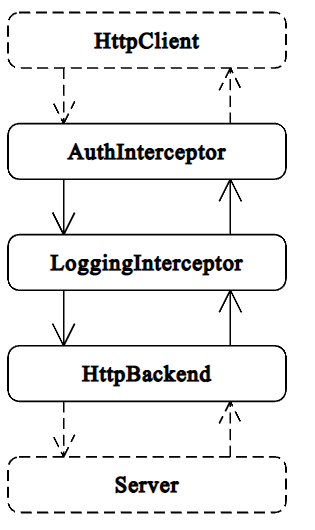
Angular applies interceptors in the order that you provide them. For example, consider a situation in which you want to handle the authentication of your HTTP requests and log them before sending them to a server. To accomplish this task, you could provide an AuthInterceptor service and then a LoggingInterceptor service. Outgoing requests would flow from the AuthInterceptor to the LoggingInterceptor. Responses from these requests would flow in the other direction, from LoggingInterceptor back to AuthInterceptor. The following is a visual representation of the process: